Open to internships, full-time roles, and research collaborations
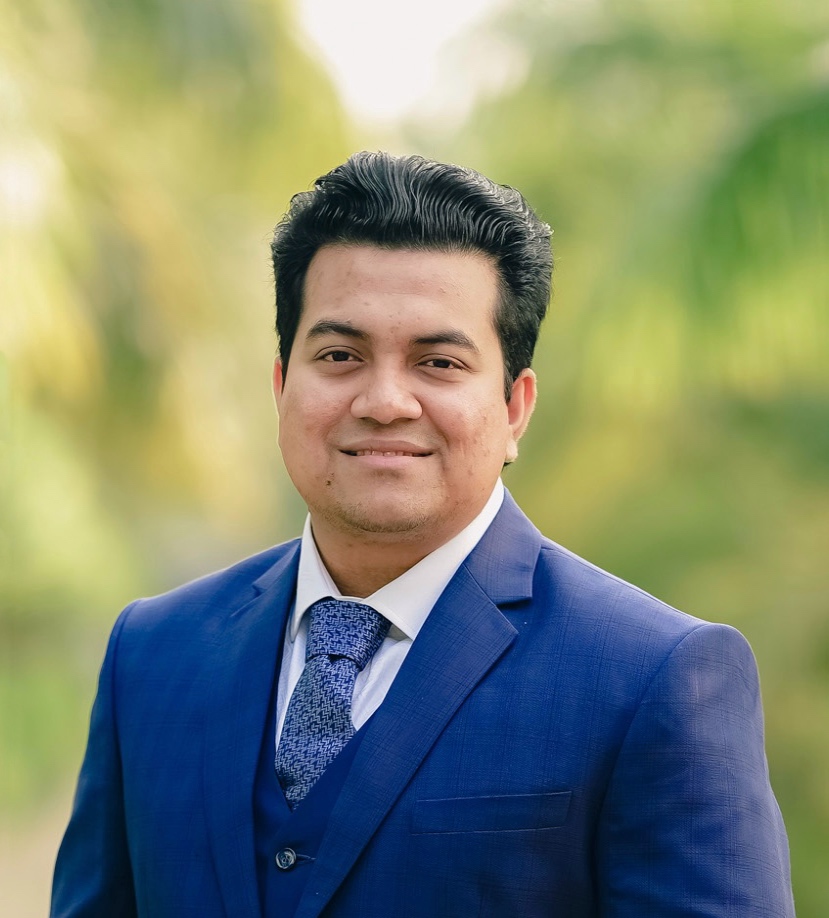
Tanzim Mahfuz
Ph.D. Candidate in Electrical & Computer Engineering · University of Maine
Specializing in explainable, trustworthy, and resilient AI, with published research in top venues including IEEE TIFS, COMST, DAC, and CVPR, spanning AI security, hardware security, computer vision, and agentic AI.
Research at the intersection of hardware and AI
I am a Ph.D. candidate in Electrical and Computer Engineering at the University of Maine, where my research focuses on building explainable, trustworthy, and resilient AI systems for complex real-world problems. During my Ph.D., I have worked across hardware security, AI security, digital design automation, computer vision, and agentic AI, developing complete research pipelines from problem formulation and data generation to model design, implementation, evaluation, and publication. I led X-DFS, an explainable AI framework for security-aware design-space exploration published in IEEE TIFS, and POLARIS, a machine learning framework for power side-channel mitigation published at DAC. I also co-developed DASH, a differentiable adversarial machine learning framework accepted at CVPR 2026, and have contributed to multi-agent AI research, including systems for tool use, planning, verification, and the evaluation of harmful behavior across interacting agents.
Alongside my publications, I developed and provisionally filed two patents involving generative and agentic AI for semiconductor design. One focuses on generative AI-based leakage-aware secure hardware transformations, while the other introduces an explainable multi-agent framework for evaluating cross-PDK migration difficulty across multiple technical domains. These projects gave me experience taking an early research idea through system design, implementation, evaluation, collaboration, and intellectual property development.
I am particularly interested in LLM architecture because I believe the architectural principles behind modern language models are reshaping how intelligent systems learn representations, reason across multiple steps, use tools, retain context, and interact with users. I want to understand these systems beyond surface-level application and contribute to the design of models and agentic systems that are reliable, adaptable, and useful in practice. Before beginning my Ph.D., I worked as a full-stack software engineer, which shaped my interest in building systems that are not only technically strong but also scalable, maintainable, and usable by others. The broader goal of my Ph.D. has been to become a researcher and engineer who can enter an unfamiliar domain, understand its core challenge, and independently develop an effective AI-based solution while communicating the work clearly to both technical and non-technical audiences.
Research interests
Security & Trust
Machine Learning
Software & Systems
Recent updates
- January 2026DASH, our meta-attack framework for synthesizing stealthy adversarial examples, appears at CVPR 2026. Read more
- January 2026Three papers accepted at GOMACTech 2026 on agentic AI and side-channel mitigation.
- December 2025Presented POLARIS as a poster at the Warren B. Nelms IoT Conference, University of Florida, and at the DAC Young Fellowship program.
- November 2025DISARM, on target-device-informed mitigation of software runtime side channels, appears in IEEE Transactions on Information Forensics and Security. Read more
- September 2025Provisional patent filed for generative-AI-based, leakage-aware secure transformations in digital hardware, jointly with the University of Florida.
Featured publications
A selection from 13 peer-reviewed papers.
- 2026
DASH: A Meta-Attack Framework for Synthesizing Effective and Stealthy Adversarial Examples
IEEE/CVF Conference on Computer Vision and Pattern Recognition (CVPR)
- 2026
DISARM: Target Electronic Device Informed Mitigation of Software Runtime Side Channel Vulnerabilities
IEEE Transactions on Information Forensics and Security (TIFS)
- 2025
POLARIS: Explainable Artificial Intelligence for Mitigating Power Side-Channel Leakage
62nd ACM/IEEE Design Automation Conference (DAC)
- 2025
SALTY: Explainable Artificial Intelligence Guided Structural Analysis for Hardware Trojan Detection
43rd IEEE VLSI Test Symposium (VTS)
- 2024
DERMS Cybersecurity Scenarios, Trends, and Potential Technologies: A Review
IEEE Communications Surveys & Tutorials
Academic background
-
Ph.D. in Electrical and Computer Engineering
Fall 2022 – PresentUniversity of Maine · Orono, Maine, USAGraduate Research Assistant, SIEGE Lab
- CGPA 3.76
-
Master of Science in Computer Engineering
September 2022 – May 2025University of Maine · Orono, Maine, USAGraduate Research Assistant, SIEGE Lab
- CGPA 3.67
-
Bachelor of Science in Computer Science & Engineering
March 2016 – January 2021Jahangirnagar University · Dhaka, Bangladesh- CGPA 3.79
Explore further
Everything from the CV, organised by theme.